Security should never become a priority only after something goes wrong. Across Sri Lanka, incidents involving robbery, theft, and property crimes continue to rise. Therefore, families and businesses must take practical steps early to protect what matters most.
The Sri Lanka Police has consistently highlighted this ongoing risk. In addition, authorities urge the public to improve daily awareness and protect money, gold, and other valuable assets.
For Sri Lankan families, security is not simply about protecting a building. In fact, it is about keeping parents, children, and loved ones safe. Most importantly, proper precautions bring lasting peace of mind.
## Real Security Risks Faced in Sri Lanka
Recent events clearly show that criminals actively target properties containing high-value items. For example, Sri Lanka Police reported a major robbery in the Galnewa area. During this incident, armed intruders entered a private residence, threatened the family, and stole approximately Rs. 200 million in cash, gold, and a luxury vehicle. Consequently, six suspects were arrested following extensive investigations.
This incident serves as a serious reminder for everyone. Even a quiet home can become a high-priority target if criminals believe valuable assets are inside.
Furthermore, security threats are not limited to private residences. Commercial properties face equal danger. For instance, warehouses, factories, retail outlets, and construction sites frequently face unauthorized intrusions, inventory theft, and malicious damage.
Police investigations also highlight the crucial value of surveillance. In a recent Wellawatte robbery case, officers tracked suspects across 73 kilometres by analyzing nearly 500 CCTV feeds. As a result, authorities recovered the stolen goods and caught the suspects. Security cameras are not just passive recording tools; they are vital investigative evidence when properly set up.
## Strengthen Your Home and Business Security
The first step in effective protection is identifying vulnerable areas before criminals do. Therefore, property owners should routinely inspect gates, doors, window latches, perimeter walls, and outdoor lighting.
CCTV systems should specifically cover critical areas. These include main entryways, driveways, parking zones, and secluded storage spaces. In addition, camera lenses must remain clean and positioned correctly so recorded footage remains clear and usable.
For commercial operations, protection requires more than basic surveillance. A complete security plan must include visitor management, employee access restrictions, key control, and alarm systems.
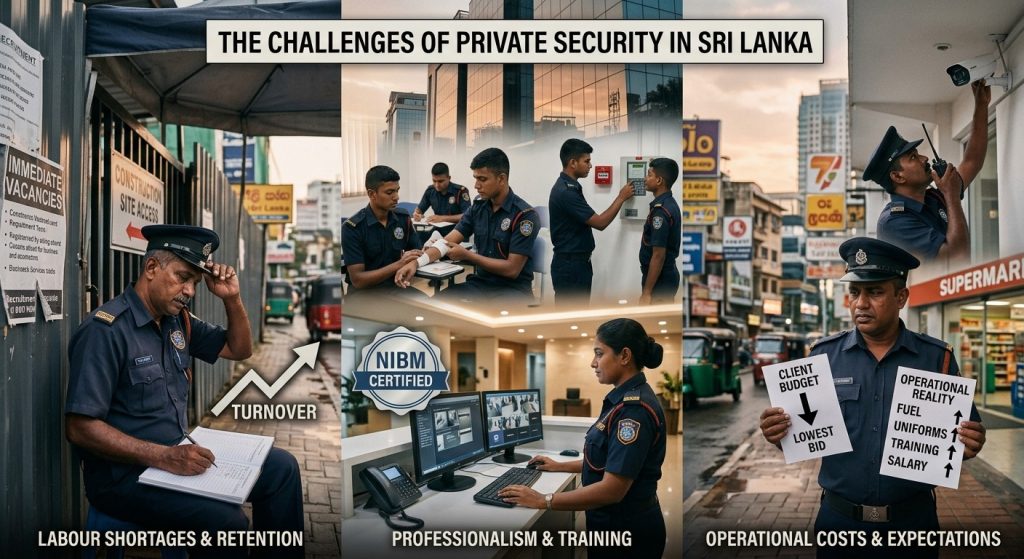
Moreover, professional security officers provide an irreplaceable layer of physical defense. Their visible presence deters criminal attempts. In addition, trained guards manage entry points, carry out continuous patrols, and immediately report suspicious activities.
## Security Is About Prevention, Not Just Response
A widespread mistake is addressing security only after a crisis occurs. Unfortunately, by that time, irreplaceable valuables are lost and human lives are put in danger.
A proactive approach is always superior. Therefore, every family and business owner should regularly ask: *“If an intruder attempted to enter this premises tonight, where are our biggest vulnerabilities?”*
Sri Lanka Police repeatedly notes that negligence and lack of awareness create easy targets. Security does not require turning a property into an impenetrable fort. Instead, it requires multiple coordinated layers: trained personnel, active CCTV, reliable alarms, bright perimeter lighting, and clear emergency protocols.
In today’s environment, personal safety and asset protection should never be left to luck. Evaluate your vulnerabilities today and establish solid defenses before an incident occurs. Ultimately, effective prevention is always better than regret.


