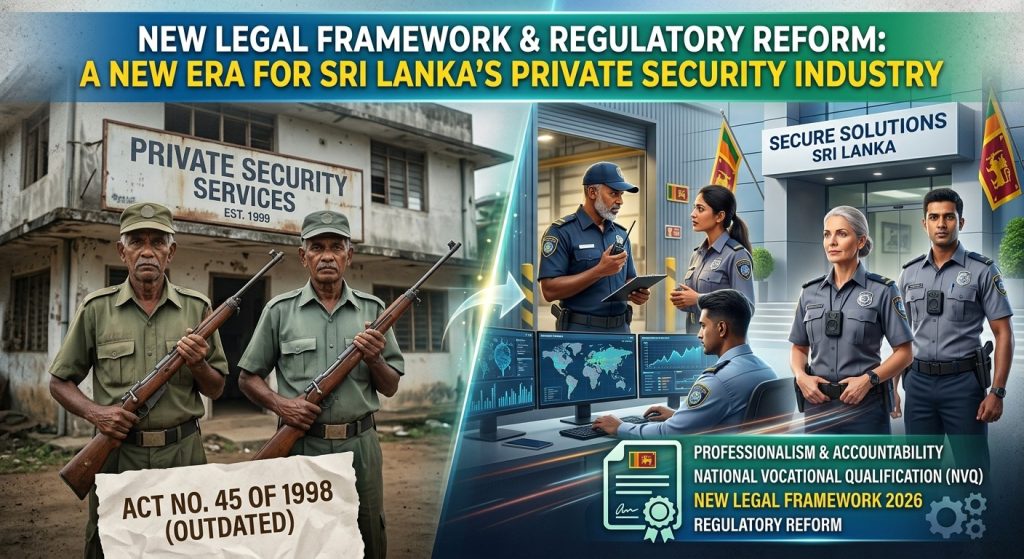
Sri Lanka’s private security industry is entering an important period of transformation. As businesses increasingly rely on professional security services, the traditional perception of a security guard as simply a “watchman” is gradually changing. Instead, clients now expect trained, qualified security professionals. Industry stakeholders, including the Sri Lanka Security Service Providers Association (SLASSPA), are driving this shift by advocating greater regulation, standardization, and professionalism within the private security industry.
Moving Towards Professional Standards
One of the most significant developments is the growing focus on structured training and National Vocational Qualifications (NVQ). Introducing NVQ-based training provides security personnel with a recognized pathway to develop their practical knowledge and core competencies.
Modern security responsibilities extend far beyond monitoring entrances and protecting property. For example, security personnel must respond swiftly to emergencies, identify potential risks, manage access control, and communicate effectively with clients. A standardized training framework therefore establishes clear competency requirements across the entire sector.
In addition, structured qualification helps employers identify capable personnel while giving officers a respected career pathway. For clients, this shift provides lasting confidence. A professionally trained officer understands emergency procedures and represents the client’s organization responsibly.
Integrating Military and Police Experience
Sri Lanka’s private security sector also benefits from the deep experience of former military and police personnel. Many disciplined individuals transition into the commercial sector after completing their public-service careers. Consequently, their background in situational awareness, physical discipline, and emergency response provides an invaluable foundation.
However, commercial security environments often require additional competencies. These include modern customer care, workplace communication, and technology awareness. Therefore, a structured public-private transition programme bridges this gap effectively. Targeted training helps veterans apply their existing operational capabilities directly to private-sector standards.
Building a Professional Security Industry
The future of the private security industry depends on developing people as much as protecting premises. Standardized qualifications, continuous education, and ethical guidelines collectively elevate the industry’s reputation.
Furthermore, adopting NVQ-based training represents far more than an ordinary certification initiative. It creates a skilled, accountable workforce ready to meet the complex demands of modern businesses. As Sri Lanka builds a more regulated environment, security personnel are no longer simple gate watchmen. In fact, they are certified professionals actively safeguarding business continuity and organizational safety.


