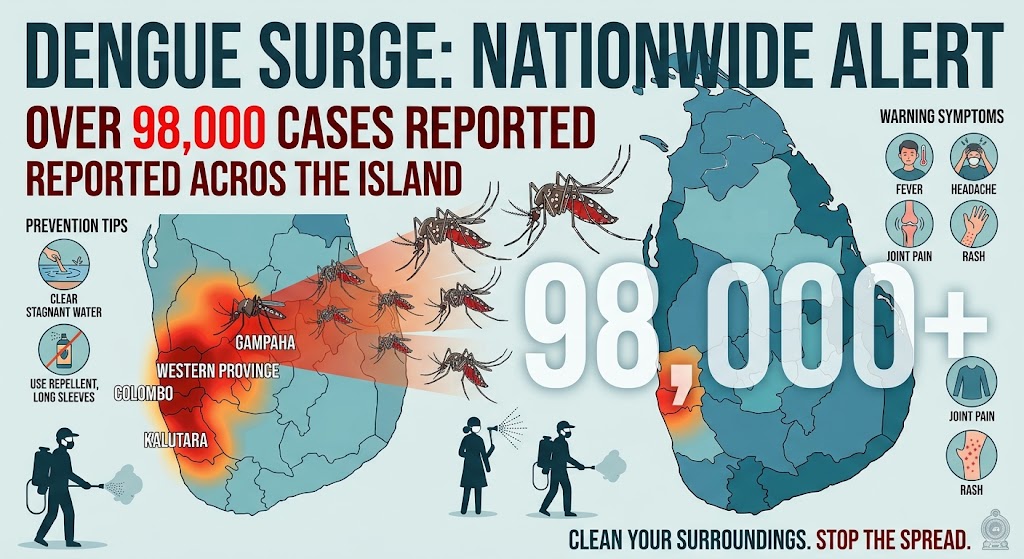
Health authorities have issued an urgent warning. The total reported dengue cases across Sri Lanka have now officially crossed the 98,000 mark. In addition, persistent seasonal rains have created ideal conditions for mosquito breeding. Therefore, the outbreak has reached critical levels and placed severe strain on local healthcare facilities.
More than half of the reported cases remain heavily concentrated in the Western Province. Specifically, Colombo, Gampaha, and Kalutara are reporting the highest infection rates.
Understanding the Dengue Risk
The Aedes aegypti mosquito transmits the dengue virus. It breeds in even the smallest collections of clean, stagnant water. Consequently, rainwater trapped in discarded coconut shells, blocked roof gutters, canvas sheets, and unkempt garden pots creates a thriving environment for mosquito larvae.
| High-Risk Areas | Peak Biting Times | Key Warning Symptoms |
|---|---|---|
| Western Province (Colombo, Gampaha) | Early morning (sunrise) | High sudden fever & severe headache |
| Central & Southern Provinces | Late afternoon (before sunset) | Joint/muscle pain & skin rash |
Immediate Action Steps for Your Household
To protect your family, you can take several simple precautions:
- Conduct a Weekly Water Sweep: Inspect your garden, roof gutters, flower vases, and refrigerator drip trays every 3 to 5 days. As a result, you can easily empty, scrub, or turn over any containers holding water.
- Use Mosquito Repellent: Apply DEET or citronella-based repellents on exposed skin. This is especially important during peak biting hours in the early morning and late afternoon.
- Install Window Screens: In addition, keep doors and windows closed or fit them with fine mesh to keep mosquitoes outside.
Crucial Medical Advice
If you or a household member develop a sudden high fever, do not take NSAIDs like Ibuprofen, Aspirin, or Diclofenac. This is because these medicines can significantly increase the risk of internal bleeding.
Instead, use only paracetamol for fever management. Furthermore, seek immediate medical evaluation at the nearest clinic or hospital for a full blood count (FBC).
Community action is our strongest defense against dengue cases. Therefore, check your yard today, inform your neighbors, and help halt the spread.


