Sri Lanka’s private security industry plays an important role in protecting businesses, institutions, residential properties, warehouses, and construction sites. With thousands of security officers deployed across the country, private security services in Sri Lanka have become an essential part of the nation’s overall safety environment.
However, the industry continues to face several operational challenges. These issues affect service quality, employee retention, and overall efficiency. Therefore, security companies must find practical ways to meet the growing expectations of modern clients.
Labour Shortages and Employee Retention
One of the biggest challenges faced by private security companies is the shortage of suitable security personnel. Security work often demands long hours, night shifts, weekends, and public holidays. Consequently, recruitment and retention remain difficult across the sector.
The industry also experiences high employee turnover. Many officers leave their positions in search of better salaries, predictable hours, or overseas employment opportunities. As a result, companies face continuous pressure to recruit and train fresh replacements.
In addition, the rising cost of living makes competitive remuneration a major concern. Officers must meet household expenses while working in demanding environments. Security providers therefore face the difficult task of balancing fair wages with client budget constraints.
Professionalism, Training, and Changing Security Demands
Modern security is no longer limited to simply standing at an entrance or checking visitors. Today, security personnel must understand access control, CCTV monitoring, incident reporting, emergency response, fire safety, and first aid. However, maintaining consistent standards across a large workforce is challenging.
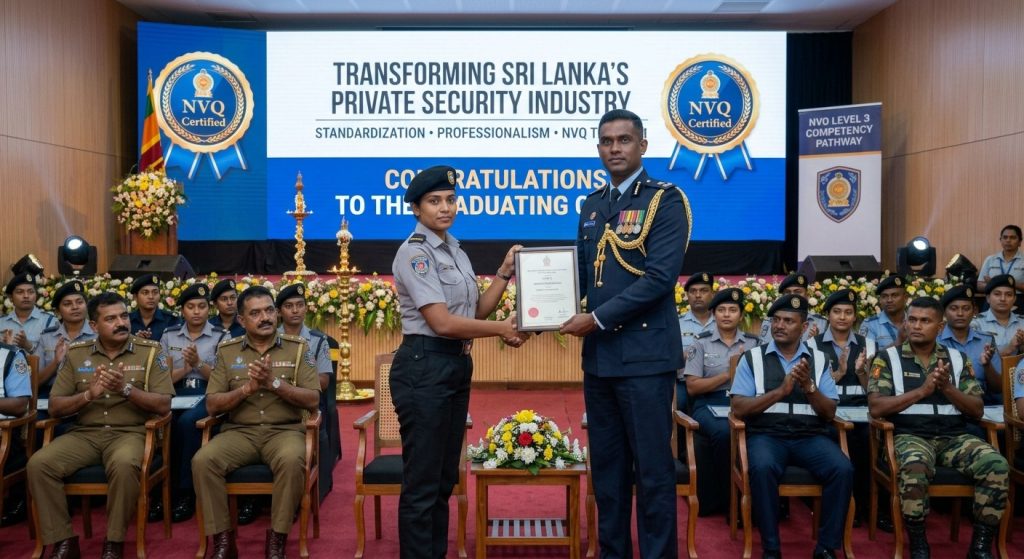
Officers deployed across different locations often possess varying levels of education and field experience. Therefore, structured training and competency-based qualifications are essential. Aligning programmes with National Vocational Qualifications (NVQ) helps elevate private security into a respected management function.
Rising Costs, Client Expectations, and Future Solutions
Private security companies also face rapidly increasing operational costs. Expenses such as uniforms, statutory payments, transportation, communication equipment, and administrative supervision continue to rise. Meanwhile, clients frequently expect comprehensive security coverage at low commercial rates.
When contracts are awarded solely based on the lowest bid, companies struggle to maintain high service quality. To combat modern risks like theft, unauthorized access, and workplace vandalism, providers must integrate trained personnel with active surveillance technology.
Ultimately, high-quality security requires reasonable investment. By improving training standards, employee welfare, and technology adoption, private security services in Sri Lanka can build a sustainable, highly professional future.


