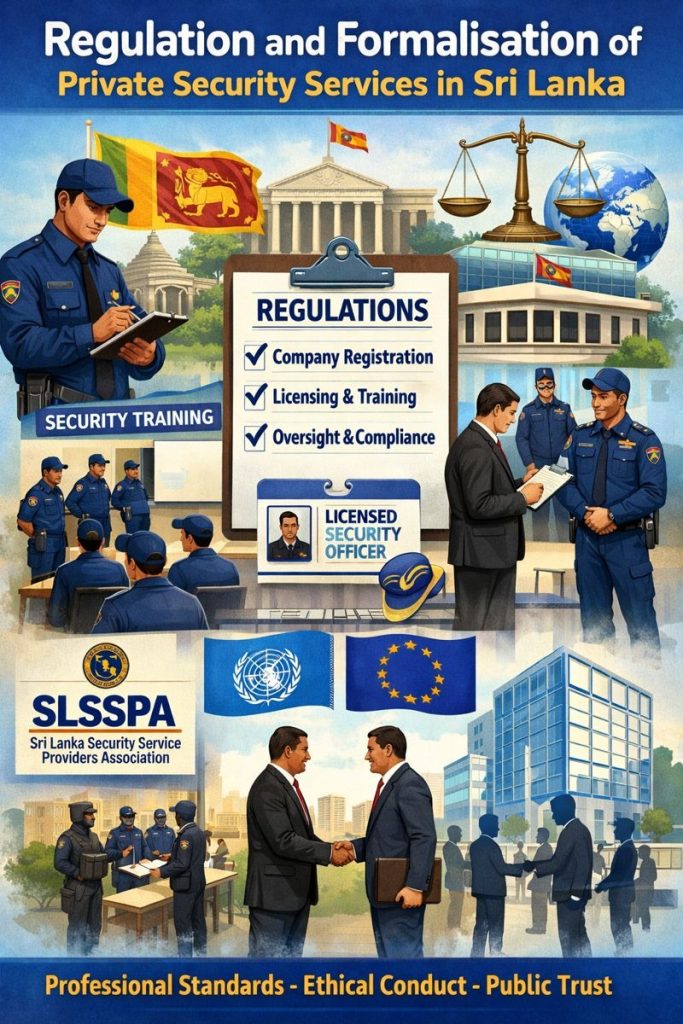
The commercial protection sector across the island is entering a vital phase of transformation. Today, modern private security services in Sri Lanka are gradually moving toward greater regulation and formalisation. Consequently, this shift reflects the growing importance of professionalism, accountability, and ethical standards across the entire sector.
Industry stakeholders actively highlight the urgent need for structured regulatory frameworks. These oversight mechanisms cover the mandatory registration of security firms, comprehensive licensing of personnel, and baseline training standards.
Establishing Clear Regulatory Frameworks and Oversight
These regulatory measures ensure consistent service quality and reinforce public trust. Furthermore, formalisation actively safeguards the legal rights, fair wages, and welfare responsibilities of security personnel. Key reform areas currently advancing across the industry include:
- Mandatory Corporate Licensing: Registering and vetting commercial protection providers to eliminate unauthorized operators.
- Standardized Guard Training: Instituting certified curriculums covering physical defense, customer service, and emergency response.
- Statutory Labor Safeguards: Enforcing strict adherence to minimum wage legislation, EPF/ETF contributions, and structured working hours.
- Oversight Mechanisms: Conducting independent inspections to maintain rigorous operational readiness.
The Crucial Role of Industry Bodies and Global Standards
Industry bodies continue to play a pivotal role in driving these essential improvements forward. For instance, associations like the Sri Lanka Security Service Providers Association (SLASSPA) consistently advocate for higher operational benchmarks and formal professional recognition.
In addition, leading service providers align their internal protocols with recognized international guidelines established by institutions like ASIS International. As regulation matures, formalisation will substantially enhance industry credibility, attract institutional investors, and support sustainable economic development.
A regulated, highly disciplined security force remains essential for safeguarding national commercial interests. Discover reliable, fully compliant security solutions for your enterprise with Manko Security.


